As a follow-up to my prior post on goals, I wanted to take a step back and focus on how to achieve your goals. The key is to have a plan. It sounds simple and obvious, yet it’s so often overlooked. As Antoine de Saint-Exupéry, author of The Little Prince once said, “a goal without a plan is just a wish.”
Why bother?
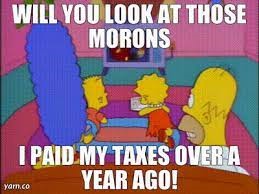
To most, planning is about as exciting as paying your taxes. Which reminds me of one of my all-time favorite Homer Simpson scenes, as quoted at left (see longer clip here).
In the clip, while Krusty is waiting in line to mail his taxes, he is asked why he waited until the last minute. He responds, “because I’m an idiot.”
We’ve all been that idiot – and always say “next time, I’ll plan ahead.”
The ROI on Planning
Dale Carnegie once said, “An hour of planning can save you 10 hours of doing.” I personally think Carnegie undersold it. He only focused on you – i.e., the person doing the planning. But most projects involve other people, often very large teams. That hour of planning can easily save 10 hours per person. Which makes the potential return on investment of planning exponential.
How to get started
At Potomac, we teach a project management framework called Think-Plan-Do for project management. It’s important to note: the thinking needs to come first. Understand your goals, objectives, and what you want to accomplish. Have a clear vision about what the end looks like.
But the critical part for moving from vision to reality is the plan. How will you achieve your objectives? What steps do you need to take? Who else should be involved?
Five tips that can help you be a better planner
1. Fit-for-purpose
Not all plans should be the same. I think this is one of the major areas where people struggle. To get your plan “just right,” you need to match the energy you put into developing the plan to the magnitude of the task. Planning can be as basic as jotting down the roles and responsibilities and needed steps.
When I decided I wanted to write more, I made a list of a few ideas for topics. Similarly, when I start writing, I draft a basic outline and some key themes/quotes that I want to cover. It’s a quick plan and easy to implement.
2. Avoid over planning

There are a handful of people who can take a small project and turn it into the moon landing. They map out detailed RACI grids and build out Gantt charts showing every step. They involve a multitude of stakeholders wanting to please everyone (or alternatively out of fear of excluding someone).
These plans overwhelm teams with specifics and often lack practicality—such as needing to gain consensus from a very large team or trying to meet best-case timelines. Any change to the plan creates tremendous work. Eventually, the maintenance of the plans becomes as time-consuming as accomplishing the task itself. Paradoxically, nothing gets done.
3. Take the time to aim

More common than the over-planner is the under-planner.
We’ve all seen the busy executive whose actions are best described as “Ready-Fire-Aim.” They trade thoughtfulness and deliberation for decisiveness. While there are many books and consultants espousing this belief, I believe this scattershot approach often leads to focusing on the wrong priorities; going through process steps out of order; and ultimately, increased error, cost, and overall frustration.
Don’t compound the problem by mimicking the behavior.
4. Balance Supply and Demand
As an economics major in undergrad, I slip into econ-speak from time to time. And while my use of economic vocabulary frequently elicits eyerolls from my family (not to mention my friends, clients, co-workers…), please allow a small pseudo-economic digression.
When people think about goals, I like to think of those as the demand side. They are focused on outcomes – what do you want to get/achieve?
But too many people neglect the “supply side.” This is how your objective will be achieved. What are the internal resources, budget, and amount of time available to accomplish the task?
The key to a good plan is to evaluate whether it’s achievable given the allocated resources. And if it’s not, update the plan until it feels doable.
5. Be flexible
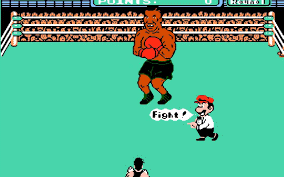
Mike Tyson famously said, “everyone has a plan until they get punched in the mouth.” While the thought of getting hit in the mouth by a 1980s era Mike Tyson seems scary as hell, his opponents were, after all, professional boxers. They should have included getting punched in the mouth as part of their plan.
I try and keep the Tyson quote top of mind. The more critical the objective and for any longer-term plan, it’s best to expect to be punched in the mouth. Stuff will go wrong, priorities will change, there will be employee turnover, reorganization of the business, etc. You never know what it will be, but it’s best to give yourself some cushion. And then be flexible to adjust as inevitable obstacles come up.
Conclusion
If you liked this piece, please check out our new “Currents” section of the Potomac website. If you have feedback on this topic (or others), please reach out to me on LinkedIn or via email at jwilkenfeld@potomacriverpartners.com.
Compliance Corner
My intention in writing these pieces is to connect with my network — many of whom are life science compliance professionals — while also trying to apply some general business lessons from running Potomac to those who are not. Where relevant, I’ll add a separate “Compliance Corner” to these pieces where I will cover topics specific to Compliance professionals that aren’t relevant to others.
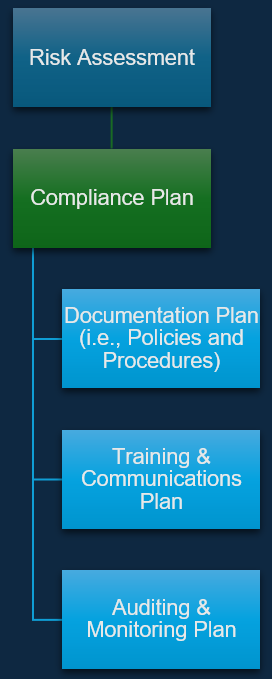
At Potomac, we’re often asked to advise Compliance teams on how to develop their plan — or as we like to call it, their Compliance Roadmap. Ideally, the plan should start with a risk assessment.
Shameless plug alert – I will be leading a workshop on this at PCC 2024 with David Ryan of Ardelyx.
The results of the risk assessment should inform which areas need enhancements in the controls (i.e., enhanced policies, training, communication) and which need validation of whether the controls are working appropriately (i.e., auditing and monitoring).
The overall Compliance Plan can then be broken down in more detail in its three primary offshoots: Documentation, Training & Communication, and Auditing & Monitoring.
This methodical approach provides a solid foundation for achieving an effective compliance program. The result is a clear roadmap with actions to complete each quarter. This helps dramatically reduce stress within employee teams and has the added benefit of reducing cost as you avoid fire drill pricing and staffing from your partners.
To achieve your compliance goals, make sure your plans are fit-for purpose, balance supply and demand, and have enough built-in flexibility, just in case you get punched in the mouth.
To receive email notifications when new Currents arrive, click here
I failed to achieve one of my “SMART” objectives for 2023. Yet, I still fulfilled my intended goals.
The difference lies in the meaning of “goals” and “objectives” and the importance of articulating what you want to happen, as opposed to getting caught up in the measurement.

Image credit: Jennifer Burk on Unsplash
As we reach the new year, many people and companies right now are thinking about New Year’s resolutions and their overall goals. Many experts will talk about how goals need to be SMART. This is based on a framework initially developed by George Doran in an article in Management Review in 1981:
- Specific,
- Measurable,
- Achievable (Doran used “Assignable”)
- Relevant, (Doran used “Realistic”)
- Time-bound (Doran use “Time-related”).
I read the original Doran article for the first time this past week. While I’ve heard the term “SMART goals” for years, Doran used the term “SMART” to define corporate “objectives.” Without knowledge of the original Doran terminology, that is the term we’ve used at Potomac as well. We encourage Potomac employees to identify their goals and think about the best path forward to achieving them using a
framework that looks something like this:
- Goals = Plain text descriptions of what you want to happen in the future.
- Objectives = The steps that you will take to achieve your goals.
- SMART Objectives = How you will measure over a specified time period whether you are fulfilling your objectives.
My personal example:
Early last year, coming off shoulder surgery, I was concerned about its impact on my health. I knew many of my preferred exercise activities were now off-limits, including cancelling a planned ski trip with friends.
I wanted to ensure I stayed in shape, so I decided I wanted to walk more. I’d also been reading about the mental (and physical) health benefits of being outdoors for some portion of the day. I decided I wanted to spend more time outside. Lastly, since I often sit at a screen for much of the day, I thought that quiet time by myself would be beneficial for me and Potomac.
Goals
- I want to exercise more.
- I want to spend more time outside.
- I want to spend time by myself – without a screen (e.g., thinking, listening to music/podcasts).

I started 2023 by walking my neighborhood before work. I didn’t do it every day, but most. I’d also try and go for a longer walk/run on weekends. After a couple of months, I looked at my iPhone’s Health app and saw I was averaging 3,000 more steps than 2022. Being a math geek, I realized that would be more than 1,000,000 steps over the course of the year. I thought that would be really cool! 1 million more of anything sounded like a huge accomplishment.
I did some more math and to get to 1,000,000 more steps, I needed to average 2,740 more steps per day.
I felt that was hard, but achievable and led to my SMART objective:
| Objective | SMART Objective |
| I am going to regularly walk my neighborhood on days with no commute | I will walk 1,000,000 more steps in 2023 than 2022 (as measured by my phone). |
The Result:
The 3,000+ pace was tough to maintain. During the summer, I found it harder to keep up my walking habit, especially on weekends. By autumn, the average was down to 2,500 steps so I figured out how much I’d need to increase my walking to get to the 2,740 per day pace. I tried – but had a hard time increasing activity to the needed pace and remained flat throughout the Fall. By the end of October, I knew I was going to fall short.
As the year approached the finish line, with my shoulder now fully healed, our family went on a ski trip. I managed to ski 6 days and got the most exercise of any week I had the whole year! And all of it was spent outdoors.
Yet, my phone (correctly) didn’t count any of my skiing as “steps.” By December 27, I was down to 2,445 more steps per day than 2022, the lowest it had been all year. Multiply that by 365 and you get 892,425 more steps. I had failed to hit the 1 million step objective by more than 10%.
The Result, Part 2:
I am “goal-oriented” and don’t like missing objectives. It would be easy for me to dwell on being 100,000 steps short of my objective. But I was able to flip my mindset and focus on the original goals: I had exercised more, spent a lot more time outside, and had time to quietly reflect.
| Goals | Achieved? |
| I want to exercise more. |  |
| I want to spend more time outside. | |
| I want to spend time by myself (e.g., thinking, listening to music/podcasts). | |
It was during one of the walks that I came up with the idea to write this article. Keep your priority
focused on the outcome that you want to achieve, not the measurement.
Epilogue: 2024 Goals:
I am very much still working on how I want to implement these (more on that later), but I’ve come up
with a few goals so far for 2024.
- I want to write more
- I want to support Potomac’s goal of implementing a “teaching and learning culture”
- I want to stay in touch with people that I don’t communicate with often enough
I decided to start with this piece. I hope you’ll join me as I start my walk toward achieving my 2024
goals. Have a Happy New Year!
To receive email notifications when new Currents arrive, click here